Pages

Showing posts with label science fiction. Show all posts

Friday, December 28, 2012

Rabid (1977)

keloid /ke·loid/ (ke´loid)
a sharply elevated, irregularly shaped, progressively enlarging scar due to excessive collagen formation in the dermis during connective tissue repair.

Following up my essay on the architecture of Cronenberg's Shivers, it's fitting I continue with his second film of body horror, Rabid. I enjoyed recognizing some stars from Shivers returning to the screen. In fact, Shivers and Rabid create a pleasant multiverse alternative timeline ot the fall of Montreal by zombie-like transformed humans. And yet Cronenberg does not trap himself within the confines of the zombie genre. My few comments on Rabid will consider the physiological message emerging from Keloid Clinic.

As a plastic surgery clinic, they seek to make external appearance beautiful. The examination room has a poster of da Vinci's Vitruvian Man on the wall. The use of these "neutral cells" (read as stem cells) to recreate the proper texture of flesh show. I caught a phrase from a magazine in the waiting lounge, "the truth about skin care" that seems to be a late warning about this fixation on the external. Ironically, a keloid does form and these aesteticians cause internal changes they cannot begin to comprehend.

The motif of external to internal leads to support the perhaps obvious conclusion that Rabid is a film of penetration. The protagonist's armpit penis, the use of needles to immunize, feed, and sedate, the drill that penetrates the health minister's car, and most importantly, biting, the vector for infection. The doctors of the clinic gave a female a phallus, perhaps they only imagine true beauty in the shape of a man?

Monday, December 17, 2012

The World, the Flesh, and the Devil (1959)

I admit, this film does not completely match the rest of my macabre list. This solemn, post-apocalyptic film deals with the horror of loneliness and social constructs that still dominate the main character's thought processes even when there are no external pressures. I enjoyed the empty scenes of New York.  I wonder if Will Smith's I am Legend directors/designers watched this movie? Talking to mannequins seems to be a motif.

The black and white city will forever be a powerful image. I don't have any deep original analysis at this moment. This writer has some solid ideas.

Friday, November 11, 2011

Сталкер 1979

Zig, Zaq, Zoop! I'm writing again. What are the chances? Basically I got into college, I'm now in college, and I just saw a science fiction movie. Might as well write.


Tonight's special was shown on 16mm format in the MCM department. Assuming you can't read the Cyrillic title, the movie was Stalker, by Andrei Tarkovsky. It was glorious in that long, dragged out Eastern European way. Read the wikipedia if you want a summary cause I'll be going straight to my own thoughts and interpretations.

So basically, the overall sci-fi theme was the trinity of science, art, and spirit. The novum was a strange alien aura that haunted a manor in the middle of some Russian country. I really enjoy the simplicity of the plot: get to the Zone, which fulfills at least 2 hours of the movie.

One of my current theories is that any long form art has the ability to push and push and idea into your head then create a surprise that just stuns you (see my analysis of the Oasis in Fallout 3). Anyway, this idea was beautifully done by having a telephone suddenly ring once the hapless trio finally got to the mansion. It was hilarious and completely shattered the world to a point of absurdity which is healthy for a movie to not take itself to seriously.

I really like the decrepit, rusting Russian countryside where concrete melds with weeds. Tank ruins, flooded tiles, chemistry flasks floating in rancid water, a random room with small sand dooms, the "meat grinder" pipe hallway, it was all intense and gripping as a truly unnatural form of human creation slowly decaying. It makes me respect Half-Life 2 even more for capturing the same Eastern European vibe.

I overheard some other audience members say "oh that was totally an acid trip" which just bugs me. Drugs are not the end all for creativity in movies. Instead, the plot followed the guide archetype where only one person has knowledge of where to go (kind of like Gollum) and as a result his chooses the path most significant to himself. The reason this "trek" theme works so well is because it dominates the majority of the movie. We only know the characters by title: Stalker, Professor, and Writer. Nothing gets in the way for this drive to enter the Room.

The characters have quite powerful archetypes. The stalker lives for the journey, the Professor wants a reason, and the Writer is looking for a muse. The Zone and furthermore the Room reminds me of the Colour Out of Space by Lovecraft yet much more impressive. I like never fully understanding the alien presence and yet between the black dog, the unnatural sand dunes I mentioned, and the weird rain scene of the room, there is clearly a force at work.

The best irony was that the audience were the only ones to enter the room as all the characters don't want to in the end. I was thoroughly amused when the Prof (or Writer?) was just throwing stones into the room's shallow pool like some bored child. Here is the most powerful, unexplained alien presence on Earth and after deciding not to destroy it, the intellectual, the artist, great producers of civilization, don't even want a part in it.

Sunday, November 14, 2010

SF Movie Concerns

There are so many SF movies that suck. But in the grand scheme of things, there are so many movies that suck. Nay! There's a ton of art that sucks.

I've been inspired by this recent release of Skyline. I don't plan on seeing it, not only because of the disappointing reviews but also my current philosophy of avoiding the movie theatres like the plague because Hollywood doesn't deserve my money. I digress.

Skyline is the perfect example of SF glamorized only for the FX then roasted for total lack of meaning. A cheap thrill, an insult to the human mind. But I say we still need movies like it to come out, even in our modern era. It will only fulfill the generations of humorously horrible movies. I would make the connection that such bad, CGI imbued movies are akin to such laugh-fests as Attack of the Killer Shrews or The Giant Gila Monster. In a sense, they are important for the SF genre only so future fans have the ability to enjoy themselves and laugh at the horrendous low-points of SF. So don't be fearing that SF has lost its glory, in fact horrendous flicks are just planting the seeds for future geeks to enjoy.

Sunday, October 24, 2010

I found my book

I was asked during the beginning of school what is my favorite SF book. I replied at the time, "I don't know I haven't read enough of the cannon yet."

I can now safely answer, among all the wonderful SF I have read, many of which I respect and admire, Hyperion by Dan Simmons strikes at the chords of my literate soul.

It is a a novel that brings all my SF reading skills and literary understanding into one massive, festive hall. I sit on the edge of my bench, consuming red meat off the bone as a Dan Simmons plays the bard and weaves me a verbal epic.

In fact, I'll start my talk on Hyperion's own bard, Martin Silenus. He is one of the greatest characters I have ever read. His humor, attention to detail and witticism continued to make me laugh.

http://www.sfsite.com/grx/dsim/hyplg.gif

Here is the opening quote to his Cantos tale.

"In the beginning was the Word. Then came the fucking word processor. Then came the thought processor. Then came the death of literature. And so it goes."

It summarizes all I love about Hyperion, the first sentence speaks to the essence of literature. The second is a joke. The though processor is the science fiction speaking, then a prediction about humanity. Sum up the final sentence with a reference to Slaughter House 5. All magnificent.

There is humor in sending your son on a slow space trip to get the interest on his existence to accumulate enough to pay off family debts. Not to mention his slave years speaking only 9 profane words and still calling himself a poet. His gaudiness and ample swearing is a characteristic rarely seen in non-cyberpunk SF.

I won't go into each tale but I do love the idea of basically writing each story in one style of SF. As I said before, Hyperion really is a cantos, to all of SF and even literature in general. The Shakespeare, the mention of Gibson, the fact that ecologist John Muir sparked a zealous Tree-worshipping religion all are wonderful components that add to the setting and themes. (I also remember a stray Dune reference, "Once years ago in school, I saw a time-lapse holo showing the decomposition of a kangaroo mouse." (77). Totally a Muad'dib ref)

My favorite part is that the ending half of the book doesn't dwindle. Now I know that having the pilgrims enter the valley finally while singing "We're off to see the wizard" is not a technical ending, what I mean is that Simmons focuses all the stories to the very fabric of the SF setting he created.

I've seen many authors fail to get their world to resonate with the final revelations. Examples being that Stand on Zanzibar, John Brunner, and Snow Crash, Neal Stephenson lost the magic of their setting and ended the book on revelations that didn't matter (i.e. pheromones in an African culture and humanity's language was actually a virus). Instead, Hyperion gets to the core of humanity, progress or stagnation.

I summarize this with the Consul's quote

"Suffice it to say that I believe the Ousters have done what Web humanity has not in the past millennia: evolve. While we live in our derivative cultures, pale reflections of Old Earth life, the Ousters have explored new dimensions of aesthetics and ethics and biosciences and art and all the things that must change and grow to reflect the human soul.
Barbarians, we call them, while all the while we timidly cling to our Web like Visigoths crouching inthe ruins of Rome's faded glory and proclaim ourselves civilized." page 468.

Civilization and evolution, that is what humanity is all about. That and the infinite mysteries of the universe, symbolized by the labyrinths that dot nine (if i remember correctly) world of Web Space. Oh yeah, and death. That may be the kingpin in this entire existence of ours. And we all know that the Shrike, the only real demon, will keep that problem a perpetual mystery.


Below are two interesting articles I've copied for my interest as well as your own.

Friday, October 22, 2010

Begin the Countdown!


Ok, so to have a running blog post, I'm counting down the top 10 aliens of science fiction throughout any media. Be aware, there are many SF TV shows I don't watch, Dr. Who coming to mind, so I probably won't represent that aspect fairly. Regardless, blogs by definitions are opinions. Here's what I like.

10
Space Invaders

http://fc02.deviantart.net/fs33/f/2008/309/c/a/Space_Invaders_by_molotov_arts.jpg

These are the pixelated beginnings for video game SF. Parents of the late 70's didn't care if their kids were killing aliens at the local arcade. This idea is an extremely basic reason for the rise of so many non-human enemies in video games. Who cares about killing extra terrestrials that want to destroy our precious earth?

What strikes me about the Space Invaders is that they were the first instance of a zerg rush, granted humans weren't controlling them. The one-man laser cannon could easily kill a single alien with its rectangular beam but the shear number of little guys was the real problem. In addition, we have an instance of aliens getting progressively dangerous as time passes, a timeless attribute found among the galaxy's residents.

Monday, October 11, 2010

Halo: Reach reference


SF video games can't go wrong with some Star Wars themes hidden away. We cannot forget the hideously cheesy ion cannon in Starcraft 1's Terran finale ripped right out of Hoth's cold, frozen ground.

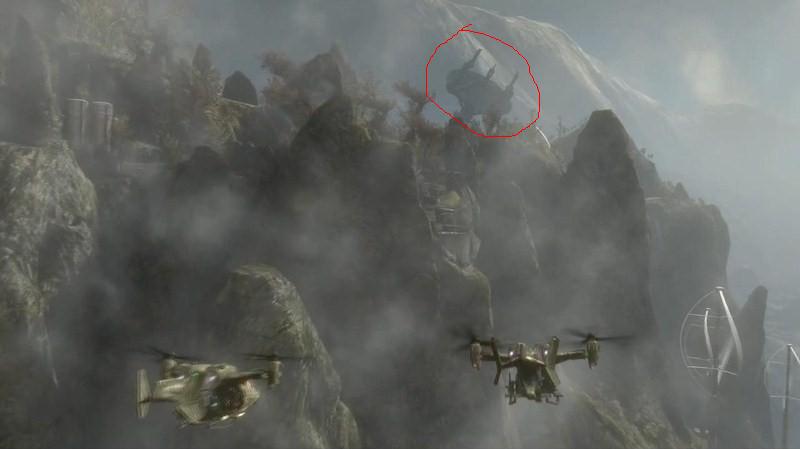
I present my theories on Reach's opening level, Winter Contingency. The architecture of the relay station circled below seems awfully familiar.


http://images1.wikia.nocookie.net/__cb20100730135454/halo/images/archive/2/23/20100816134727!Winter_Contingency.JPG

and


http://images1.wikia.nocookie.net/__cb20080325194040/starwars/images/thumb/9/9b/IShield1.jpg/250px-IShield1.jpg

Its a bit more than coincidence huh? I also must mention the role reversal seen in the later half of the level. Kat is frantically trying to close the door to the station while Leia/R2D2/Han were trying to open the doors.
What other SF references lurk about the campaign?
Enhanced by Zemanta

Sunday, September 5, 2010

Alien compared to Aliens

Alien (film)Image via WikipediaThe xenomorphs of LV426 are an iconic, terrifying bunch. I finally watched Alien and Aliens this week and I'm inspired to write after being asked which movie I like better. To begin, James Cameron has a way of taking an idea and making it a grandiose endeavor in the movie industry. "Favorite" seems irrelavant to discuss on the internet but I am willing to consider and compare the steps these movies took to be a science fiction action/horror movie.

We'll start with the singular Alien, setting; some gritty cargo spaceship and and for one part an uninhabited planet. The mystery factor a huge thrill ride when Cane discovers the field of hibernating eggs. The most important aspect is that the alien must escape from its host in a grisly manner. As much as its terrifying now, put yourself into the time period and realize that such a gruesome "birth" was a massive surprise to the first audience members.
The rest of the film follows Ripley and the crew as they try to survive against the invader. Plain and simple; human reactions to an unnatural enemy. The lack of light and space is absolutely detrimental to a human's natural abilities and scenes in the airducts ooze of claustrophobia. The only weapon available is Prometheus' gift. In addition, the discovery that "Ash is a robot" and the corporation considers the crew expendable completely destroy any sense of trust for the universe. In the end, Ripley escapes the ship with only Jonesy, a sylvan companion who will stand stand by the protag when the rest of space turns a cold shoulder.

James Cameron's sequel does not depend as much on the sci-fi setting but rather on the human interactions. Already, being 50+ years older can wreck havoc on your perspective of the galaxy. Using the allegory that the xenomorphs represent the feral, inhuman aspect of rape, the beginning scenes represent Ripley's inability to forget the terrifying monsters of her past. In addition, with the company ignoring her initial reports, she has no where to turn and lives a isolated life in an apartment complex. Agreeing to go on the expedition is only after trusting that she can get her old career back and hold hope of an attempted normal future.
Enter the marines. Classic science fiction reminiscent of Heinlein's troopers. On the planet, after a couple of interesting technology cinematics and the first alien encounter it becomes clear that training alone will not save you. It returns to ingenuity, Ripley's best resource. This time around, she is not as alone because of the discovery of Newt and the mother-daughter bond created. As the survival aspect of being locked up in the colony increases, the interactions between the humans becomes more important. Ripley needs to trust Bishop for the escape route (I would also say he represents a religious cleric who can help Ripley deal with all the rape, on a side note). Burke realized as a greedy corporate puppet and his supposed betrayal. And that one marine, the name evades me, who keeps having a break down about the inhumanity of their enemy and the hopelessness of the situation. Of course there is Ripley's lone venture into the hive center in the end but its the middle of the movie that comes alive with character development.Aliens (film)Image via Wikipedia

As a conclusion, both movies follow the SF interaction between humans and nonhumans. Alien follows a more precise sci-fi "if-then" statement, "if an alien was in the ship what would the humans do?" with a great deal of unknown and darkness thrown into the mix. Aliens on the other hand, seems to have better character interaction, and slowly gives Ripley strength to save Newt and destroy the cause of her suffering and dreams alluded to in the beginning. Because of these redemptive qualities, Aliens is a more humanist approach of science fiction while Alien is content with discoveries and scares.


Enhanced by Zemanta

Sunday, June 6, 2010

The Return, and Summer Begins

So i have an exam on monday, then it's summer. Luckily, it's physics, which fits the theme of the blog. There is not much of an excuse for not posting for 7 months but at least I'm back

I'm working on Douglas Adams, currently book two, the Restaurant at the end of the Universe. I am a fan of Sirius Cybernetics Corporation and all of their ineffective robots. And Roosta (and his towel) may be my favorite minor character.

In the video game world, I've started Doom 3 but I'll need a full night to truly delve into such a classic sci-fi horror game.

I also finally beat the Starcraft 1 Terran Campaign. Probably 4 years to late but at least I did it.
It is the ultimate ending, rebel leader turns corrupt emperor and the comrades you grow to trust are now outlaws. It's cliche but I enjoy it thoroughly, that is what science fiction is all about. The same story, told in different ways, with different universes to observe and learn.

Reblog this post [with Zemanta]

Sunday, October 11, 2009

Too long

Halo 3 ODST: We are ODST!Image by commorancy via Flickr

Dang, i haven't posted in a while. Well thats over now. I been reading and playing SF as well as
getting through school.
Halo ODST: A fine game and an honorable part of the series. Its music, setting, and scenery are by far the most intriguing. Especially New Mombasa at night, amazing. I particularly liked the use of the upgraded weapons. The smg finally has a reason to be used and the scoped pistol is a godsend for halo vets. Basically, it was Bungie's artistic view of their Halo universe. There were clear connections to post apocalyptic city atmosphere a la Left 4 Dead and Bioshock. Sadly, the obvious attempt ruins the originality of the Halo universe and only fails to add any variable to the "rampant, abandoned, automatic city of the future" formula. Regardless, the game has its moments of shear awesome action, specifically the various "Defend this position" scenarios.

Next, as a retro consideration, i recently replayed some of Pikmin, Nintendo's original rts. What a perfect blend of sci fi this little treasure is. It has the urgency (only 30 days of life support), personality (the stranded captain Olimar misses his family) and world building (the entire alternate reality of Earth and its Pikmin based ecosystem) Awesome game, awesome world. An SF video game at its finest.
Reblog this post [with Zemanta]

Tuesday, February 17, 2009

Best Movies from the Marathon

These three movies were my favorite from the marathon
  • Alien Raiders, we saw the premiere to this "straight to DVD", low budget movie and it was great. Even with minimal computer graphics the suspense was riveting. The story took place in a super market were special agents try to snuff out the hostages who have been infested with alien eggs.
  • Logan's Run, based off the book by William F. Nolan and George Clayton Johnson, Logan's Run is a dystopian escape story. The protagonists Logan and Jessica escape from their automated city and try to find the Sanctuary in the world outside. The classic, futuristic city had some really amazing models for the time and the character interaction was really clever.
  • Repo Man, reportedly a cult classic, I got my first taste of this ingenious film. This was awesome, the constant subplots and background humor makes it worthy to be watched again and again. Based around a young man (the name evades my thoughts) who reluctantly joins a repossession agency and subsequently gets thrown into the world of the Repo Man. This was the jewel of the night and really had some great wry humor along with intense "city street" dialogue.